


Dental implants have become one of the most reliable and long-lasting solutions for missing teeth. However, many people don’t fully understand what the process entails. If you’re considering getting dental implants, knowing the three key stages that will take you from consultation to a new, fully functional smile is essential. Here’s a breakdown of each step and helpful tips from a Cambridge dentist to guide you through your dental implant journey.
The Consultation and Treatment Planning Stage
The first stage of the dental implant process begins with a detailed consultation. During this appointment, your dentist will examine your mouth, review your medical history, and take X-rays or 3D scans to assess the condition of your jawbone and surrounding tissues.
What to Expect:
- Initial Examination: Your dentist will evaluate whether you have sufficient bone density to place the implants securely. If bone loss is present, bone grafting may be necessary before implanting.
- Discussion of Treatment Options: Based on the examination, your dentist will outline the treatment plan, including the type of implant, the number of implants needed, and the timeline for the procedure.
- Personalized Plan: This stage is crucial for creating a personalized treatment plan tailored to your needs. Your dentist will also discuss any additional procedures, such as extractions or bone grafts, that may be required.
Surgical Placement of the Implant
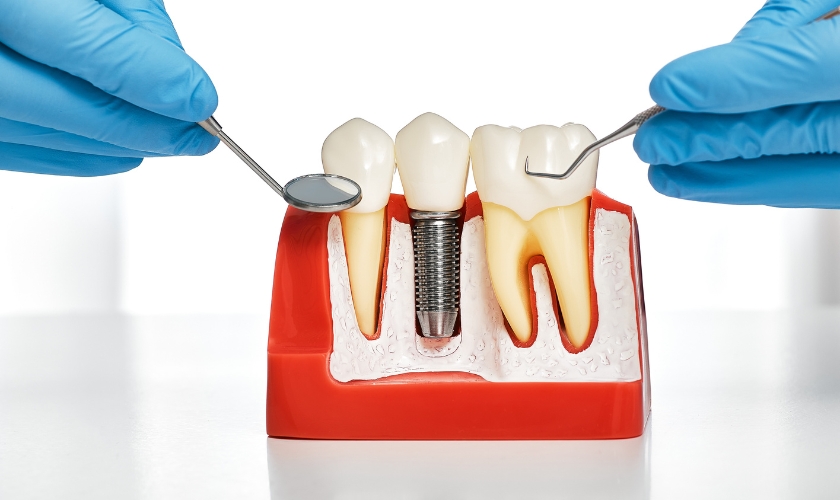
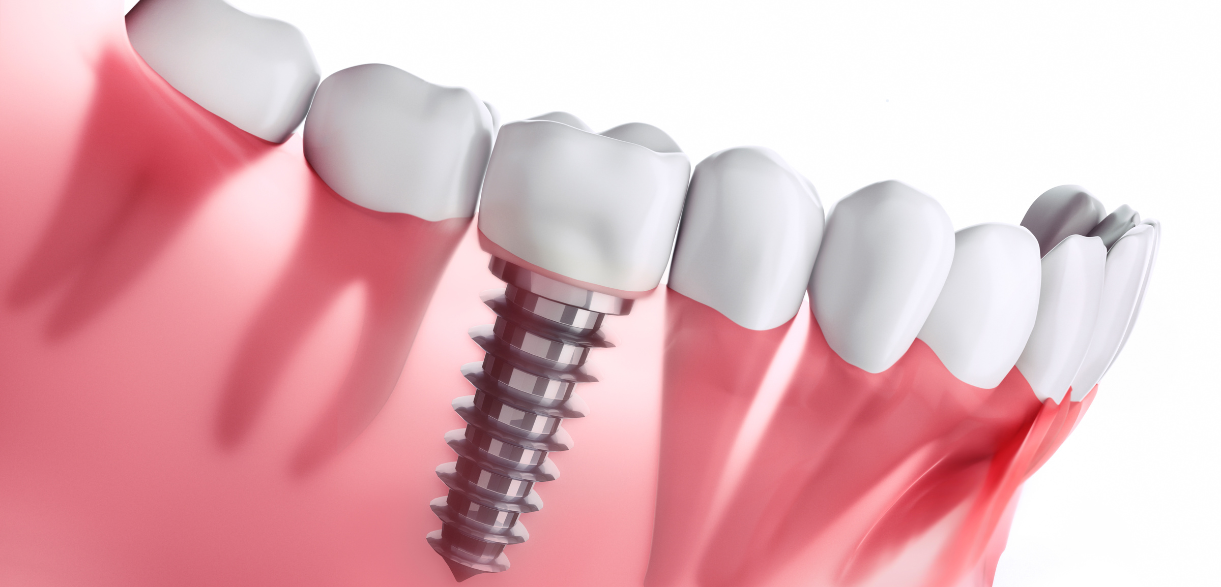
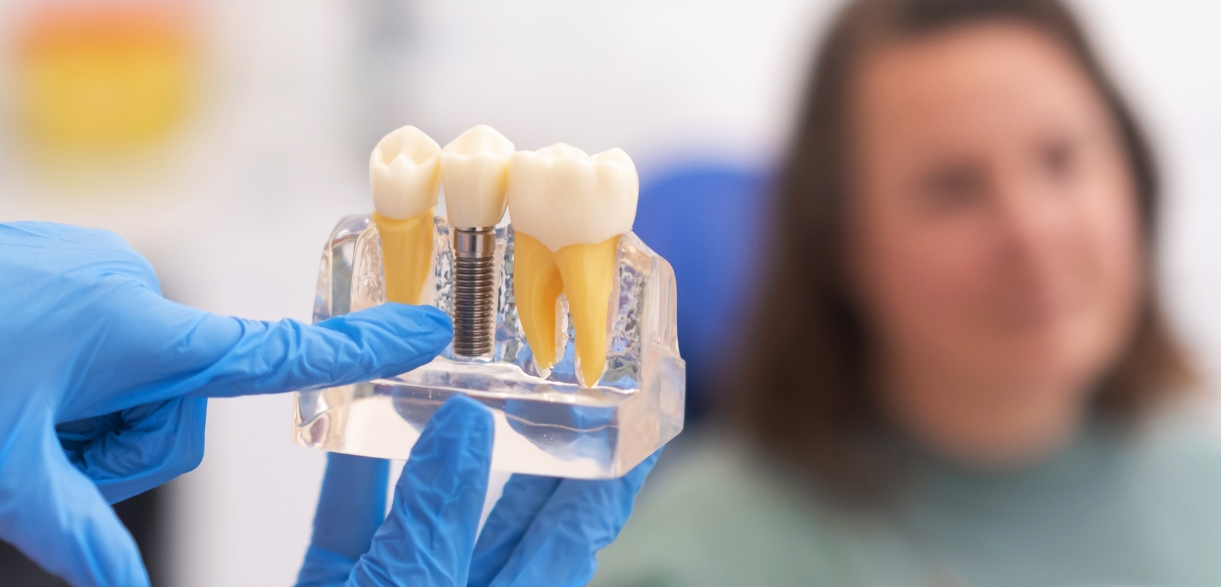
Once the treatment plan is finalized, the next stage involves the surgical placement of the dental implant. The implant is a small titanium post that acts as the artificial root of your new tooth. It’s surgically placed into your jawbone, where the missing tooth was located.
Key Steps During Surgery:
- Local Anesthesia or Sedation: The dentist will numb the area to ensure comfort. Some patients may choose sedation to stay relaxed during the procedure.
- Insertion of the Implant: A small incision is made in your gum, and the dentist will carefully drill a hole into your jawbone. The titanium implant is then placed into this space.
- Healing and Osseointegration: Once the implant is placed, your jawbone will grow around the titanium post in an osseointegration process. This stage can take anywhere from a few months to six months, depending on your bone health and how quickly you heal.
This phase is crucial because osseointegration ensures the implant becomes securely anchored in your jaw, just like a natural tooth root.
Attaching the Abutment and Crown
After the implant has fully integrated with your bone, the final stage involves attaching an abutment and placing the permanent crown. The abutment is a small connector that links the implant to the custom-made dental crown, which resembles and functions like a real tooth.
Final Steps:
- Attaching the Abutment: Once the healing process is complete, your dentist will open the gum to expose the implant and attach the abutment. The gums will heal around it but not cover it.
- Custom-Made Crown: After the abutment is attached, a dental lab will create a crown that matches the shape, size, and color of your natural teeth. Once ready, the crown is secured onto the abutment, completing the restoration.
- Final Check and Adjustments: Your dentist will ensure the crown fits comfortably and properly aligns with your bite. Any minor adjustments can be made to ensure the best fit.
How Long Does the Entire Process Take?
The dental implant process typically takes several months to complete. The timeline varies depending on the patient’s needs, such as bone density, healing time, and whether additional procedures are needed. On average, patients can expect the entire process to take between five and eight months.
What Happens After Your Implant Procedure?
Once your dental implant is entirely placed, it is important to follow good oral hygiene practices and attend regular check-ups with your dentist. Dental implants are designed to last many years, and with proper care, they can even last a lifetime.
Key Aftercare Tips:
- Maintain Good Oral Hygiene: Brush and floss daily to keep your implant and surrounding gum tissue healthy.
- Regular Dental Visits: Schedule regular visits to your dentist for cleanings and exams to monitor the health of your implant.
- Avoid Hard Foods: While dental implants are durable, it’s wise to avoid biting down on complex objects like ice or hard candy, which can damage the crown.
Common Myths About Dental Implants
Some people may hesitate to get dental implants due to common misconceptions. Here are a few myths debunked:
- Myth: Dental implants are painful.
Fact: Most patients report minimal discomfort during and after the procedure, thanks to local anesthesia and sedation options. - Myth: Dental implants are only for older people.
Fact: Dental implants are beneficial for adults of any age as long as they have healthy gums and adequate bone density. - Myth: Implants are prone to failure.
Fact: Dental implants have a high success rate—up to 98% when performed by an experienced dentist and when proper care is maintained.
Dental implants offer a permanent solution for missing teeth that looks, feels, and functions like natural teeth. The three stages of the implant process, from consultation to crown placement, provide a reliable and durable restoration that can last a lifetime. If you’re considering dental implants, consult a dentist near Cambridge who can guide you through the process and help you achieve a healthier, more confident smile.